Workforce management is the structured process of organizing, monitoring, and optimizing how employees work within a business to ensure productivity, efficiency, and accountability. It covers key areas such as attendance tracking, shift scheduling, task management, performance monitoring, and payroll coordination.
At its core, workforce management ensures that the right employees are in the right place at the right time, performing the right tasks. Without a proper system, businesses often struggle with issues such as time theft, poor attendance tracking, unstructured schedules, payroll errors, and lack of visibility into staff performance.
In modern business environments, workforce management has become essential due to increasing operational complexity. Businesses now operate across multiple locations, manage larger teams, and require real-time insights to make informed decisions. Manual methods such as paper records or spreadsheets are no longer reliable or scalable for these demands.
An effective workforce management system provides clarity and control. It allows business owners and managers to track when employees resume work, how long they work, when they take breaks, and how productive they are. This level of visibility helps eliminate inefficiencies, reduce errors, and improve overall operational performance.
Workforce management also plays a critical role in accountability. When employees know their activities are being tracked and measured accurately, it encourages discipline and consistency without the need for constant supervision. This creates a more structured and transparent work environment.
Another important aspect is payroll accuracy. Workforce management systems ensure that employee work hours, overtime, and absences are properly recorded, making payroll processing more precise and reducing disputes. It also helps businesses align staff performance with compensation, ensuring fairness and consistency.
In addition, workforce management supports better planning and decision-making. With access to real-time and historical data, businesses can identify patterns, optimize staffing levels, and improve resource allocation. This leads to better productivity and cost control over time.
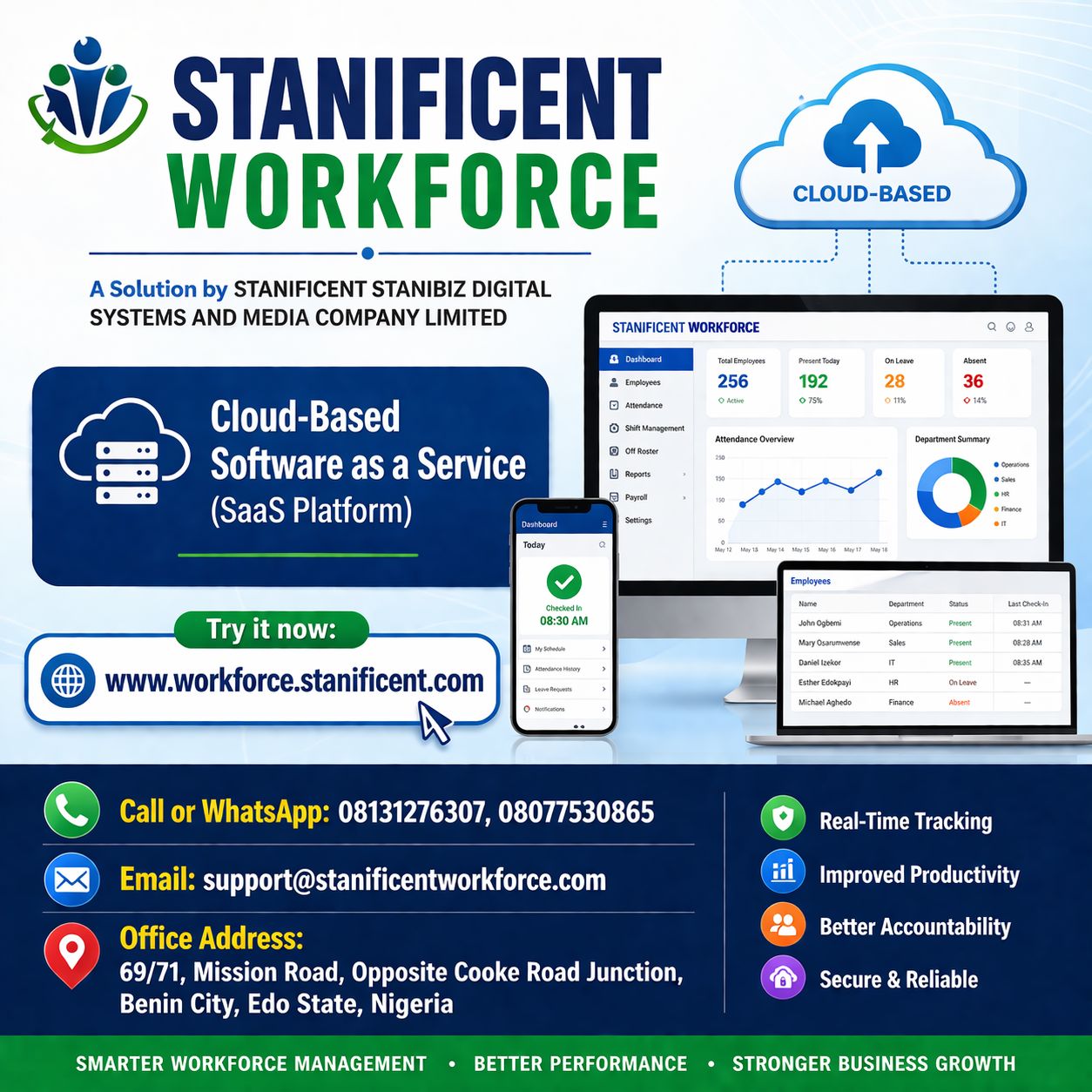
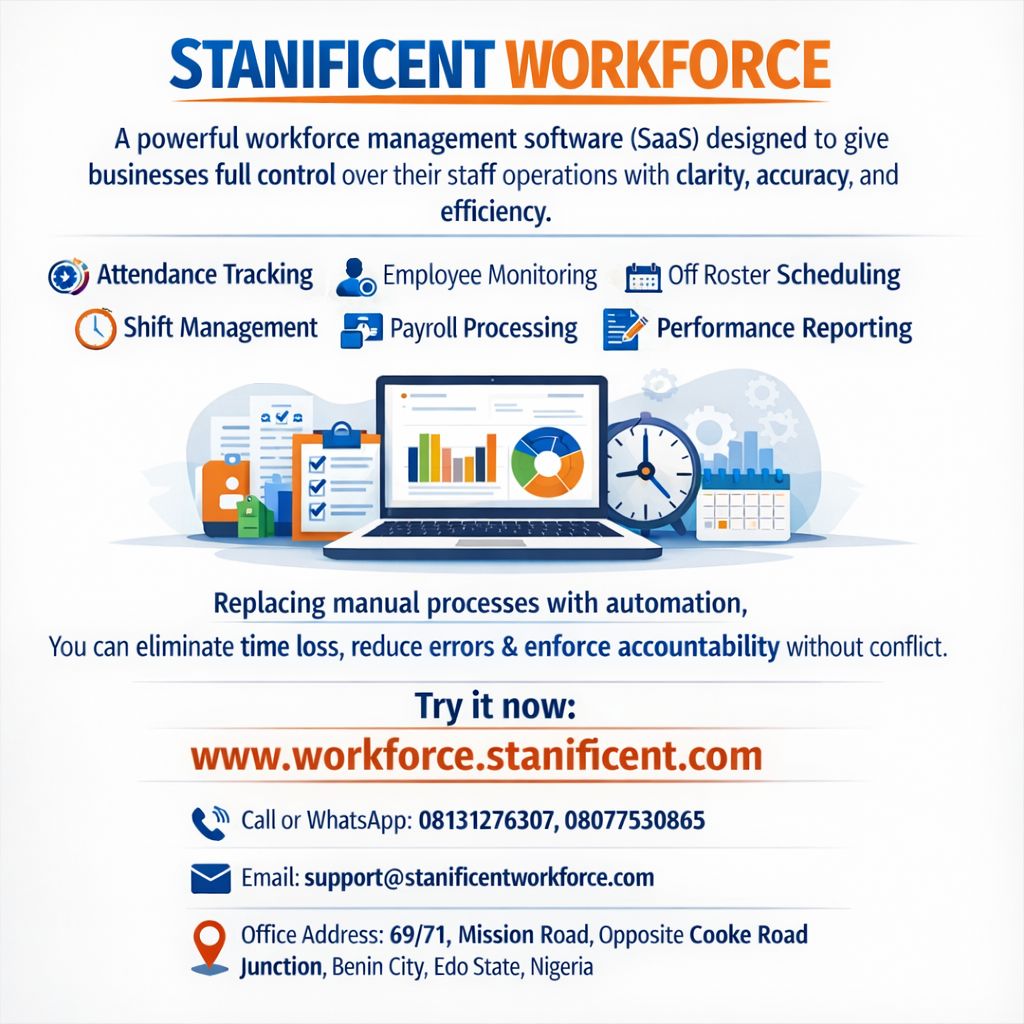
A practical example is STANIFICENT WORKFORCE, a solution by STANIFICENT STANIBIZ DIGITAL SYSTEMS AND MEDIA COMPANY LIMITED, which provides a complete workforce management system designed to give businesses full control over staff operations. It integrates attendance tracking, employee monitoring, Off Roster scheduling, shift management, payroll processing, and performance reporting into a single cloud-based platform.
In summary, workforce management is not just about managing employees—it is about creating a structured system that ensures efficiency, accountability, and growth. In today’s business environment, it is a critical foundation for any organization that wants to operate effectively and scale successfully.
Try it now: www.workforce.stanificent.com