Cloud-based workforce management software is rapidly becoming the standard for modern businesses because it provides the flexibility, efficiency, and control required to manage staff operations in a fast-changing environment. As businesses grow and operate across multiple locations, traditional methods are no longer sufficient to handle the complexity of workforce management.
One of the main reasons cloud-based systems are the future is accessibility. Businesses are no longer limited to a physical office or specific devices. Managers and administrators can monitor attendance, track performance, and manage staff from anywhere in real time. This level of access ensures that operations continue smoothly regardless of location.
Real-time data is another critical advantage. Cloud-based workforce systems provide instant updates on employee activities, allowing businesses to make faster and more accurate decisions. Instead of waiting for reports or manually compiling data, everything is available immediately, improving responsiveness and control.
Scalability also plays a major role in why cloud-based solutions are preferred. As businesses expand, they need systems that can grow with them. Cloud-based workforce software allows organizations to add users, increase storage, and expand features without rebuilding their infrastructure. This makes it suitable for small businesses, medium enterprises, and large organizations.
Automation is a key driver of efficiency. Cloud-based systems replace manual processes such as paper attendance, manual payroll calculations, and unstructured scheduling. This reduces errors, saves time, and ensures consistency across operations. Businesses can focus more on growth rather than administrative tasks.
Cost efficiency is another important factor. Traditional systems require significant investment in hardware, maintenance, and IT support. Cloud-based software eliminates these costs by providing a subscription-based model where the provider manages the infrastructure. This allows businesses to control expenses while still accessing advanced tools.
Security and reliability are also stronger in cloud environments. With automated backups, secure access controls, and continuous system updates, businesses can rely on their data being protected and available when needed. This reduces the risk of data loss and system failures.
In addition, cloud-based workforce management software supports modern work structures, including remote work and multi-location operations. Businesses can coordinate teams across different locations while maintaining full visibility and control over staff activities.
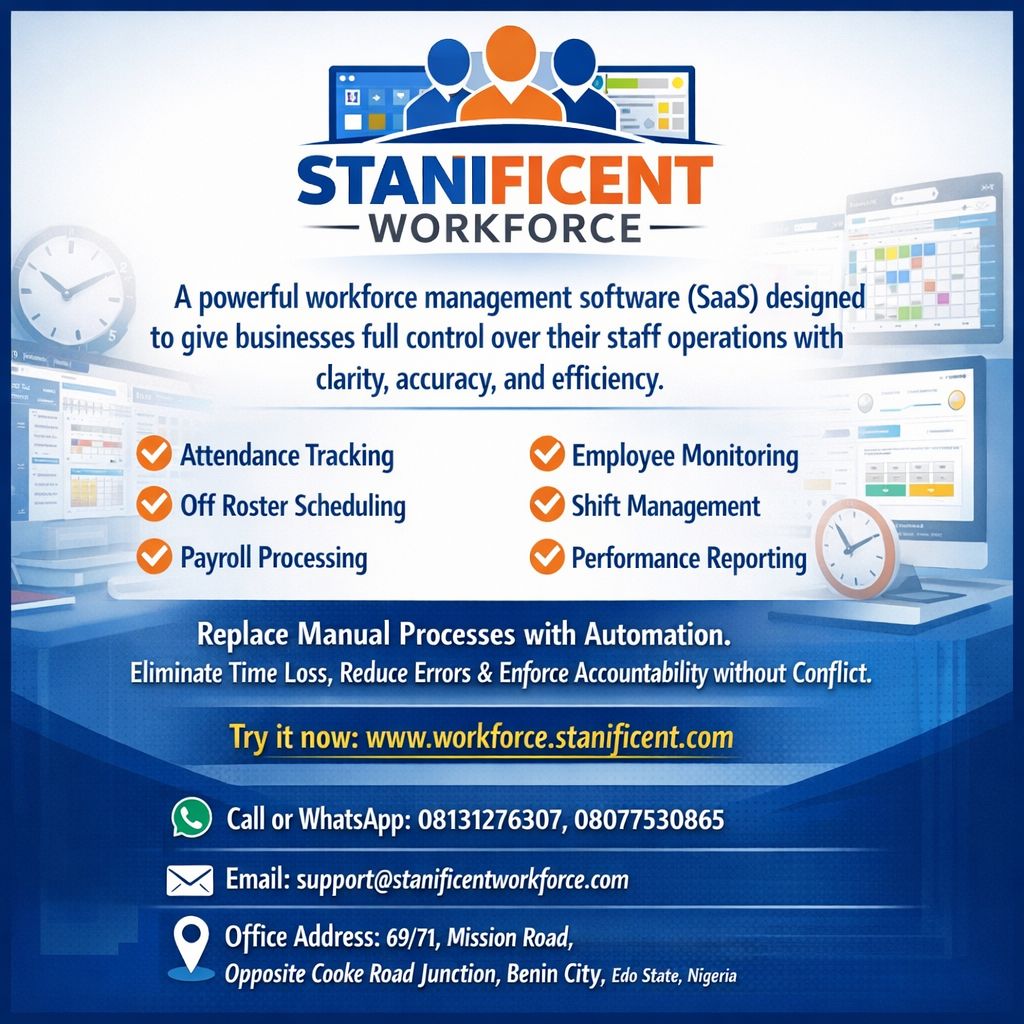
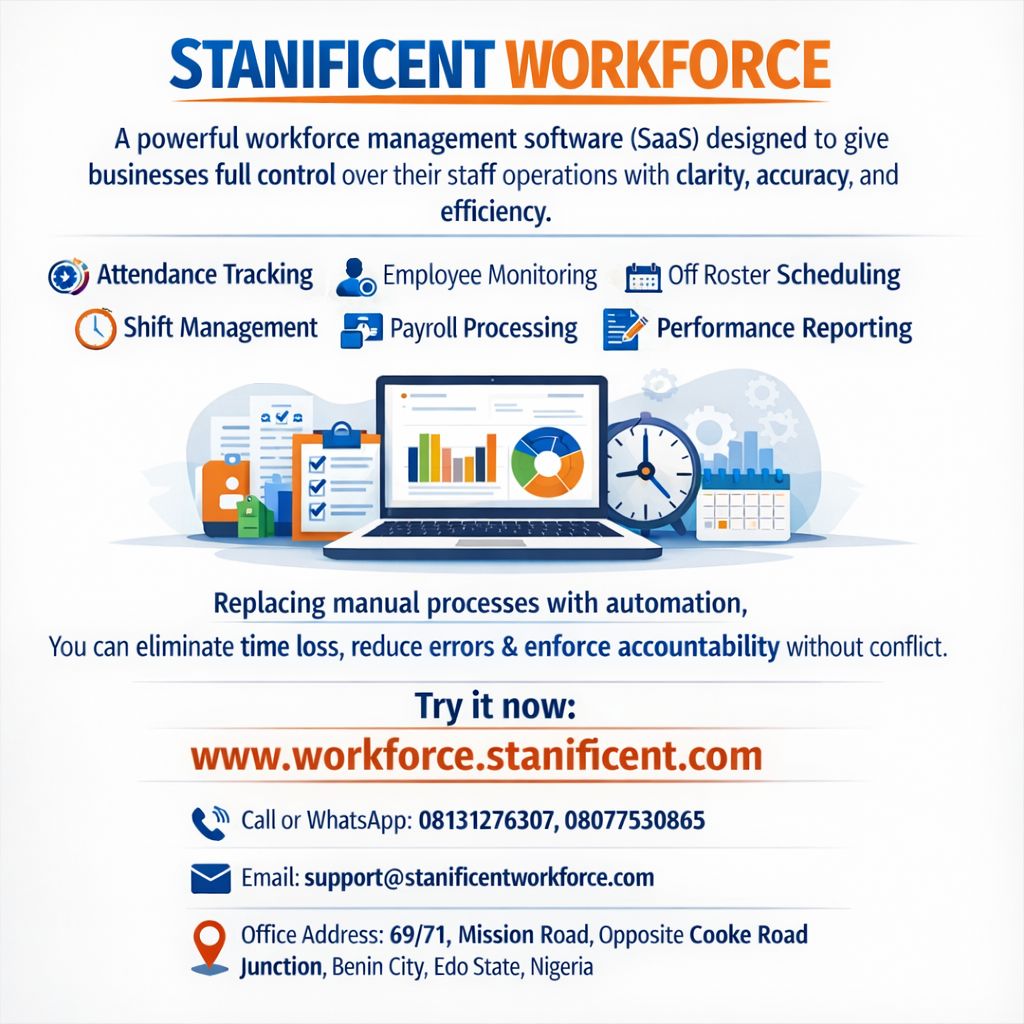
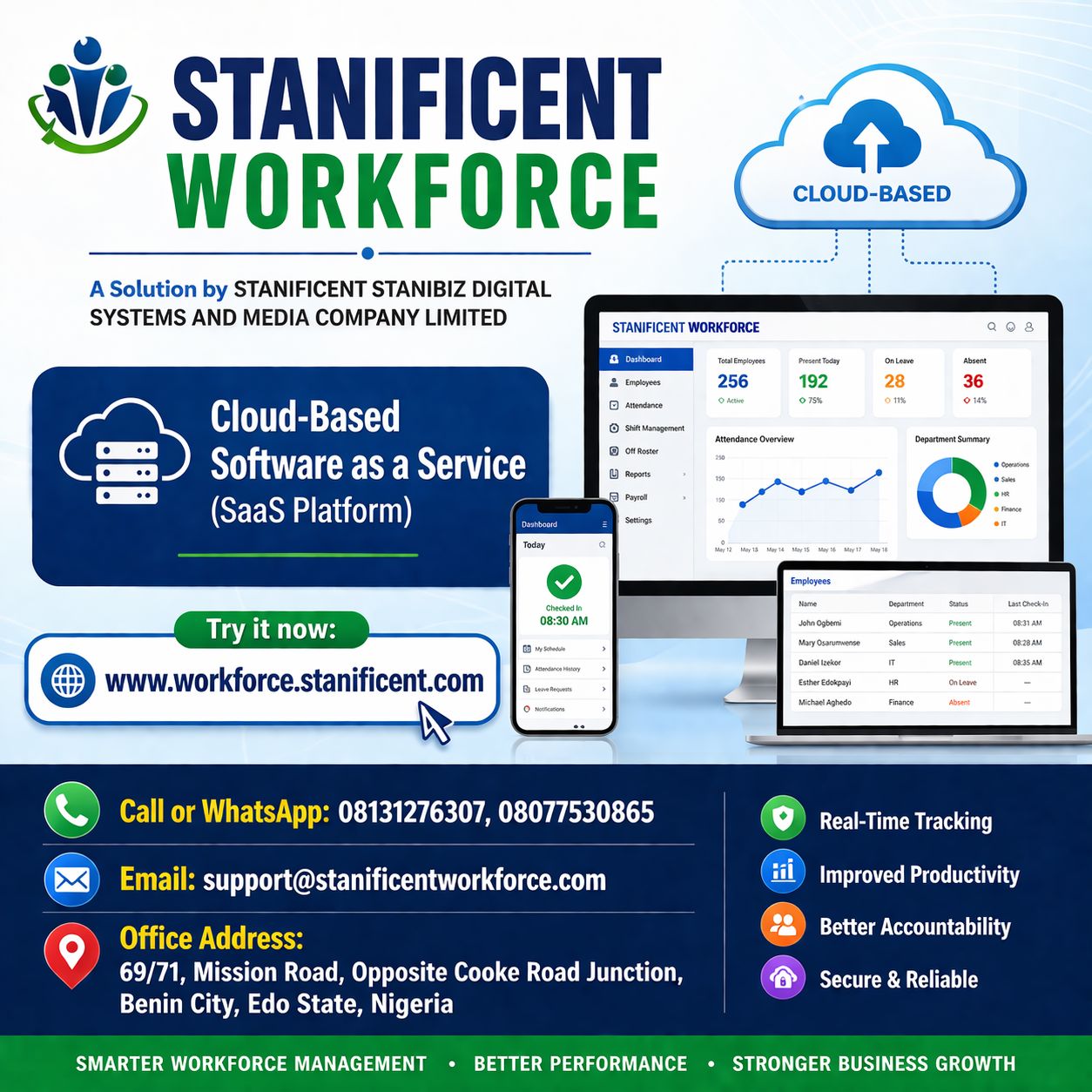
A practical example is STANIFICENT WORKFORCE, a solution by STANIFICENT STANIBIZ DIGITAL SYSTEMS AND MEDIA COMPANY LIMITED, which provides a cloud-based workforce management platform designed to give businesses full control over their staff operations. It integrates attendance tracking, employee monitoring, Off Roster scheduling, shift management, payroll processing, and performance reporting into a single, accessible system.
In summary, cloud-based workforce management software represents the future of business operations because it delivers real-time access, scalability, automation, cost efficiency, and strong security. It enables businesses to operate more effectively, adapt to change, and maintain full control over their workforce in a modern digital environment.
Try it now: www.workforce.stanificent.com
No reviews yet.
No comments yet.